Halifax · Tantallon · St. Margaret’s Bay
Septic systems
We handle excavation, trenching and backfill for septic work. Your Qualified Person or engineer supplies the plan for a new system.
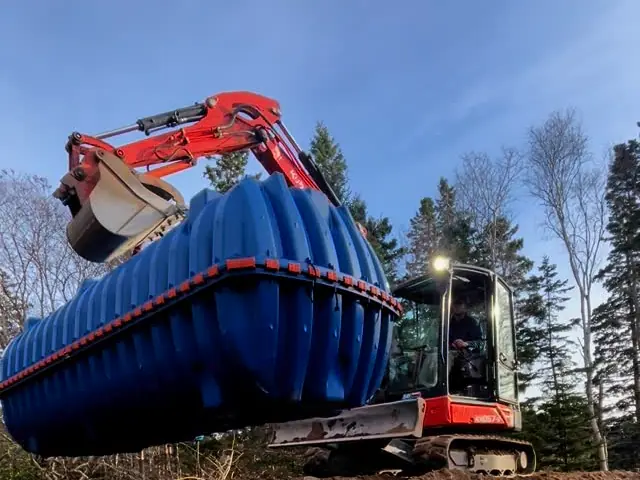
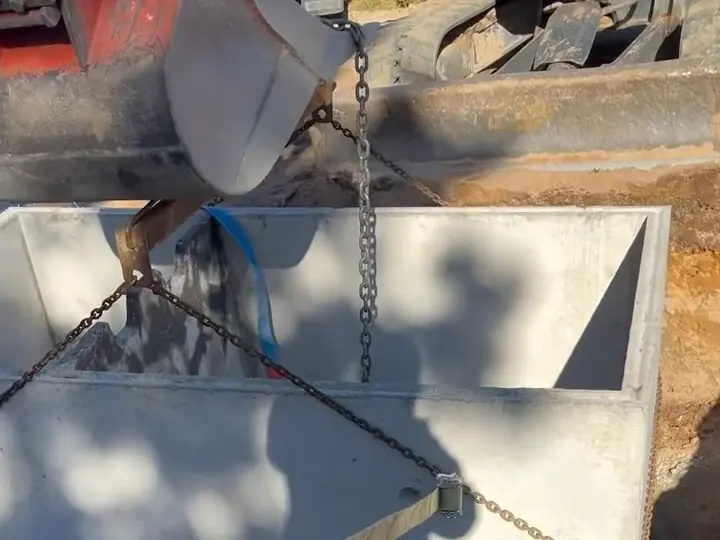
Job photos
Lowering a concrete tank
Replacing a tank in the same spot? See what’s required for a tank replacement.
Septic excavation work
- New systemsThe excavation follows the layout selected by a Qualified Person or designed by an engineer.
- Repairs and replacementsA failed tank, broken pipe and worn-out field each call for different excavation work.
- Trenching and backfillThe pipe runs between the house and tank. Once the system is ready to cover, the site is backfilled and graded.
Who does what on a septic installation
These steps apply to new systems and replacement fields in Nova Scotia. The requirements for replacing a tank in the same spot are different.
Site assessment
A Qualified Person (QP) checks the soil and the site and selects a system from the provincial standard. More complex sites need a design from a professional engineer.
Your QP or engineerNotice to the province
Your QP or engineer files a notification with Nova Scotia Environment and Climate Change, or applies for an approval if the site can’t meet the standard. Work can’t start until the province issues the receipt or approval.
Your QP or engineerInstallation
A certified installer excavates and installs the system according to the plan. The QP or engineer gives the province 24 hours’ notice before digging, and signs off on starting and again before the system is covered.
Certified installerCertificate of Installation
Within 15 days of finishing, the QP or engineer issues the certificate, with copies to you, the province and the building official.
Your QP or engineerSoil cover and grass
The field is covered with soil, then seeded or sodded. If work finishes outside the growing season, the field is mulched and seeded the following spring.
We don’t design septic systems. In Nova Scotia only a professional engineer can design one, and a QP selects one from the provincial standard. They also file the paperwork with the province.
Project costs
What affects a septic estimate?
The system plan specifies the tank, pipe, stone and fill. For the excavation, we look at access, ground conditions and the distance from the house to the field.
Replacing a system may also mean removing the old tank or field and repairing the lawn or driveway afterward.
Septic questions in Nova Scotia
Who selects, designs and installs a septic system in Nova Scotia?
A Qualified Person (QP) assesses the site and selects a system from the provincial standard; more complex sites need a professional engineer’s design. Only an installer certified by the province can build it.
Do I need a permit for a new septic system?
Usually you need a notification to Nova Scotia Environment and Climate Change, filed by your Qualified Person or engineer before any work starts. Sites that can’t meet the provincial standard need an approval instead. Homeowners can’t file either one themselves.
Can I just replace my tank?
Replacing a tank in the same spot doesn’t need a notification, but a certified installer still has to do the work. A new or replacement field does need one.
Is the new system inspected?
Your QP or engineer signs off before the system is covered, then issues a Certificate of Installation within 15 days, with copies to you, the province and the building official.
How close can a septic field be to my well or the shore?
The field must be at least 30 m from watercourses, wetlands and the ocean. Every part of the system must be at least 15 m from a drilled well, 30 m from a dug well and 3 m from property lines.
How often should the tank be pumped?
Nova Scotia guidance ranges from every 2 to 3 years to every 3 to 5 years, depending on the tank and how many people live in the house. Pumping has to be done by a certified septic tank cleaner.
What are the signs of a failing system?
Backups, slow drains, a sewage smell, sewage on the ground and soggy spots over the field. If sewage is being released, the owner must report it to the province within 15 days.
What shouldn’t go down the drain?
Diapers, sanitary products, cat litter, paint, solvents and pesticides. Go easy on fats and grease, and keep sump pump and roof water out of the system.
Can I drive on the field or plant trees near it?
Keep vehicles and equipment off it, keep trees with big roots away, and keep the field in grass.
Can a septic system go in during winter?
No rule forbids it, but the backfill can’t be frozen, and very wet spring ground can be unsuitable. If the job finishes outside the growing season, the grass goes in the next spring.
Based on Nova Scotia’s On-site Sewage Disposal Systems Regulations, the 2022 On-site Sewage Disposal Standard and provincial homeowner guidance, checked November 2026: the province’s septic page, the regulations and the standard (PDF).