Halifax · Tantallon · St. Margaret’s Bay
Gravel driveways & private roads
We build new gravel driveways, access roads and private lanes on a compacted gravel base, with ditches and culverts where the route needs them.
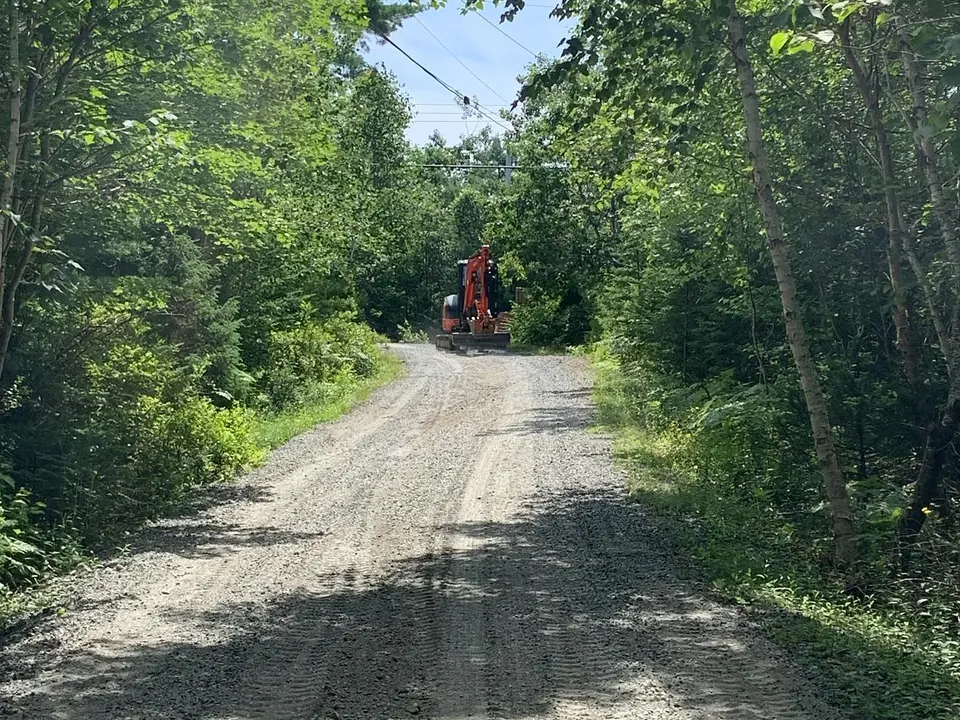
Building a new lane
- New gravel roadsPrivate lanes, cottage roads and driveways, built on a compacted base and graded to shed water.
- The gravel baseWe remove soft material and compact the coarse gravel before placing the driving surface.
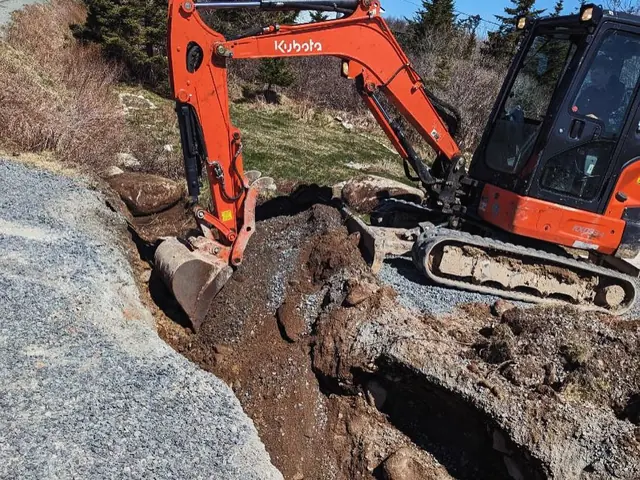
- Ditches and culvertsWe shape the ditches and install culverts to carry water away from the road.
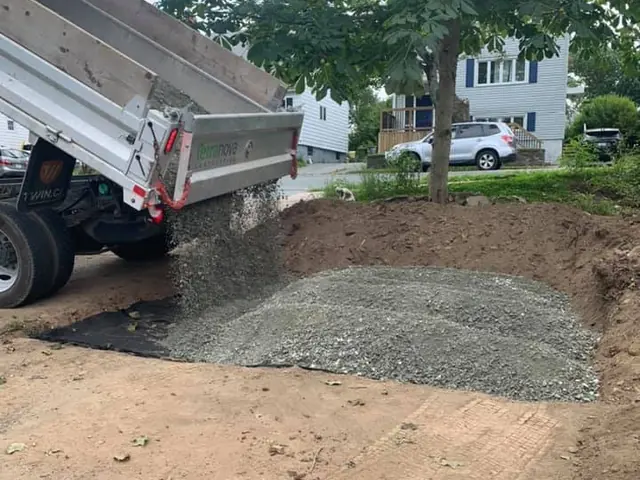
- Gravel deliveryWe haul gravel for our road work and for projects you’re doing yourself.
How a gravel road is built
Plan the route
Start with where the lane will meet the public road, how steep it is and where the water goes.
Road entrance approval
Where a new road or driveway meets a public road, the road’s owner has to approve the entrance before any digging there. On a provincial road, Nova Scotia Public Works checks the sight distance and decides whether you need a culvert and what size. For a municipal street, ask Halifax Regional Municipality about the right-of-way permit. Western HRM has both kinds of road, so check who owns yours.
Property owner, before work startsExcavation
We strip off topsoil and roots and dig out soft spots until we reach firm ground.
Build the base
We lay the coarse gravel in layers and compact each one.
Surface and drainage
Finer Type 1 gravel goes on top, shaped so water runs off to the ditches, with culverts where they’re needed. Where a driveway meets a provincial road, Public Works calls for 100 to 160 mm of Type 1 sloped toward the ditch.
Project costs
What affects the cost of a gravel road?
We look at the length and width of the road, how much gravel it needs and how far we have to haul it.
Wet ground, ledge rock or a steep approach can mean more digging. We also account for ditches, culverts and any old asphalt that needs to come out.
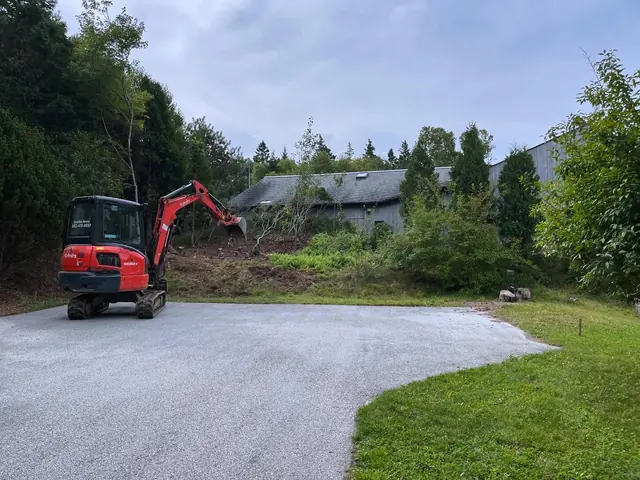
Road project photos
Gravel road questions
Do you repair existing gravel driveways?
Yes. We dig out washouts, potholes and soft spots, rebuild the base and regrade the gravel. See the storm-damaged driveway for an example.
Do I need a permit for a new road entrance or driveway?
Start with whoever owns the road. For a provincial road, contact Nova Scotia Public Works about work in the right-of-way. For a municipal street, contact Halifax Regional Municipality about a right-of-way permit before digging.
Do I need approval to widen or move a driveway entrance?
Yes, if the work reaches the road right-of-way.
Who decides the culvert size?
On provincial roads, Public Works decides whether you need one and what size. Their minimum is 500 mm for steel or aluminum pipe, or 450 mm for concrete or plastic, with 300 mm of cover. On municipal streets, the culvert has to meet HRM’s specs and pass a Halifax Water inspection before it’s covered.
Who pays for the culvert, and who looks after it?
The property owner buys and installs it and keeps it clear. Later, the Province or Halifax Water usually replaces a worn-out culvert under a home’s driveway, but not under a private road.
What gravel goes into a road?
Common practice is coarser Type 2 gravel for the base with Type 1 on top. Where a driveway meets a provincial road, Public Works calls for 100 to 160 mm of Type 1 sloped toward the ditch.
Can a new road cross a brook?
Yes, but the crossing needs a notification or approval from Nova Scotia Environment and Climate Change, a culvert sized by a certified sizer or an engineer, and a certified installer. Small culverts can only go in from June 1 to September 30, and crossing a wetland needs an approval.
Is the ditch by the road a brook?
Usually not. Ditches built for the road aren’t watercourses, but a natural stream that was straightened into a ditch still is.
Does spring affect gravel delivery?
It can. Spring weight restrictions on many provincial roads limit loaded trucks for part of the spring, so timing can depend on your road.
Based on Nova Scotia Public Works’ driveway instructions, the province’s watercourse rules and Halifax Water’s design specifications, checked November 2026: Public Works driveway instructions (PDF), the right-of-way permit, the watercourse regulations and spring weight restrictions.