Halifax · Tantallon · St. Margaret’s Bay
Land & lot clearing
We clear land for homes, driveways and private roads. We take out brush, stumps and boulders, haul away the debris and rough grade the lot.
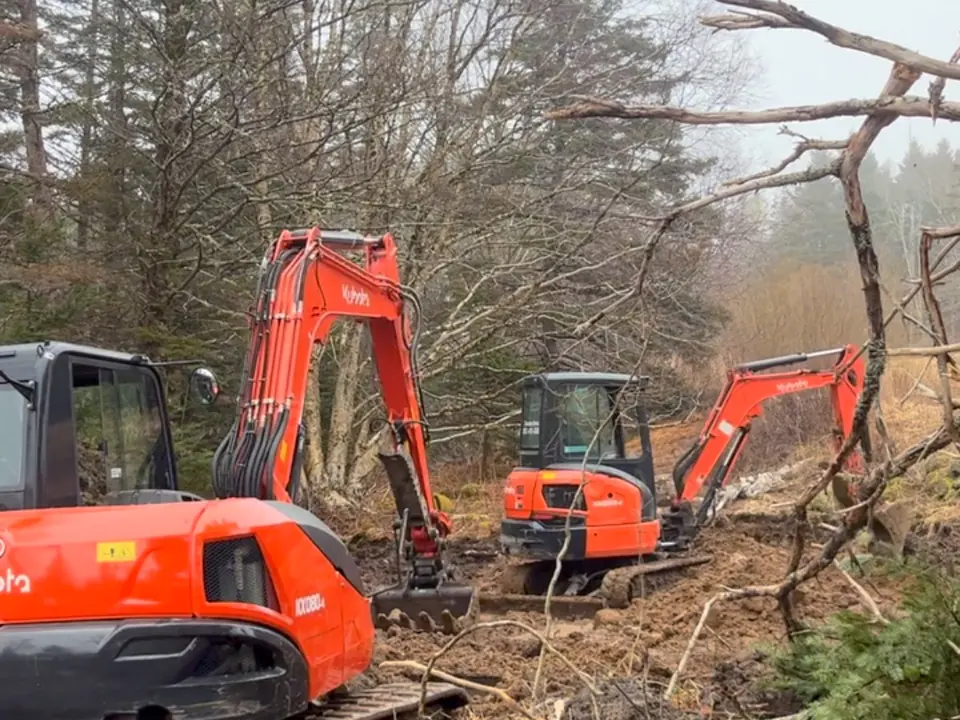
Job photos
Stump removal
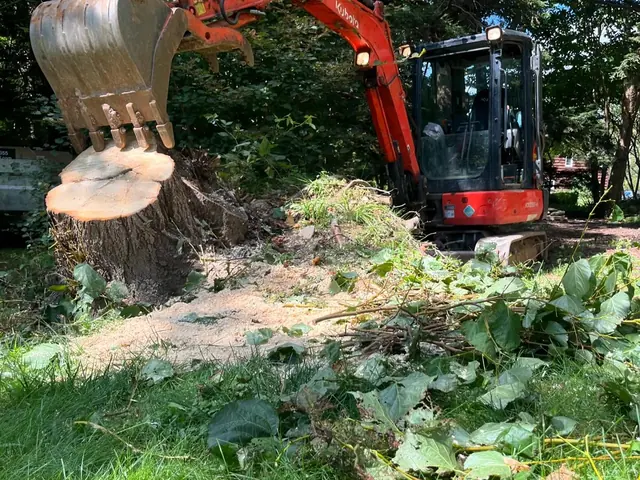
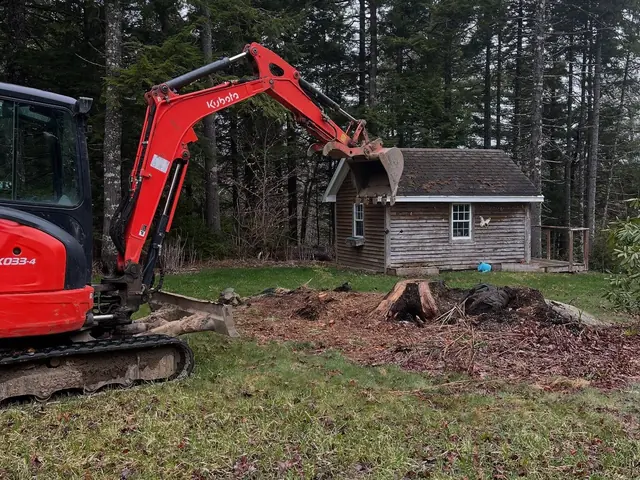
Clearing and rough grading
- Trees and brushClear the footprint for a house, driveway or private road.
- Stumps and bouldersPull stumps and roots, and move boulders out of the building area.
- Hauling and rough gradingRemove the cleared material and shape the ground for access or construction.
We also handle site work for new homes, including excavation, grading, driveways and gravel pads.
Before and during clearing
Look at the lot
Mark out the area you want cleared. Note where water runs and whether there are brooks, wetlands or steep slopes nearby.
Check the rules
HRM keeps a buffer of at least 20 m along lakes, brooks and the coast, wider on steep ground, where clearing and building are mostly off-limits. Filling or digging in a wetland, or working in a brook, needs Nova Scotia’s approval.
Before any work startsLocates
Free utility locates through Info-Excavation (clickbeforeyoudig.com or 1-866-344-5463), and a call to Nova Scotia Power (1-800-428-6230) about underground lines.
Before any diggingClear
Trees, brush and stumps come out. Nova Scotia bans land-clearing waste from landfills, so it goes to sites that accept it, or is burned only where and when the rules allow.
Rough grade
The cleared ground is graded for a house, driveway or road. Where runoff could reach water, silt fence or similar keeps the mud out.
Project costs
How we price lot clearing
Stumps and boulders take longer to remove than brush. We look at what needs to come out and where we can get equipment onto the lot.
The slope, wet ground and the amount of material we need to haul also affect the price.
Questions about clearing land
Can you clear just the driveway or house site?
Yes. We can clear just the lane or the area for the house. Let us know which trees you want to keep.
Do I need a permit to clear my lot?
It depends on the lot. Clearing near water or wetlands is restricted (see below), and a new home on HRM sewer generally needs a lot grading permit with its building permit. Check with HRM for your lot.
Can you clear near a lake or brook?
Not inside HRM’s shoreline buffer: at least 20 m from lakes, brooks and the coast, and wider on steep slopes, where clearing and building are mostly off-limits. Work in the water itself needs Nova Scotia’s approval.
Can you fill a wet spot on my lot?
If it’s part of a wetland of 100 m² or more (counting the whole connected wetland), filling, draining or digging it needs Nova Scotia’s approval. Cutting trees in a wetland doesn’t.
Can the brush and stumps be burned?
Only within the rules. From March 15 to October 15, Nova Scotia’s BurnSafe map sets when burning is allowed each day, and land-clearing burns need an industrial permit from the province. HRM adds its own permit and stricter limits on top of that.
What happens to the stumps and brush?
Nova Scotia bans land-clearing waste like stumps and brush from landfills, so it goes to sites that accept it.
Do I need to call for locates?
Always, before any digging. Request free locates through Info-Excavation at clickbeforeyoudig.com or 1-866-344-5463, and call Nova Scotia Power at 1-800-428-6230 about underground lines.
How is mud kept out of streams?
Where runoff could reach water, sediment controls like silt fence go up. Letting sediment escape into water breaks Nova Scotia law and the federal Fisheries Act.
When is the best time to clear trees?
Outside the bird nesting season, which runs from about mid-April to late August here. Federal law protects active nests.
Based on HRM’s shoreline buffer rules, Nova Scotia’s wetland, watercourse, burning and solid waste rules, and federal guidance, checked November 2026: HRM shoreline buffers (PDF), the wetland policy (PDF), BurnSafe, the solid waste rules, sediment control (PDF), Click Before You Dig and bird nesting periods.